
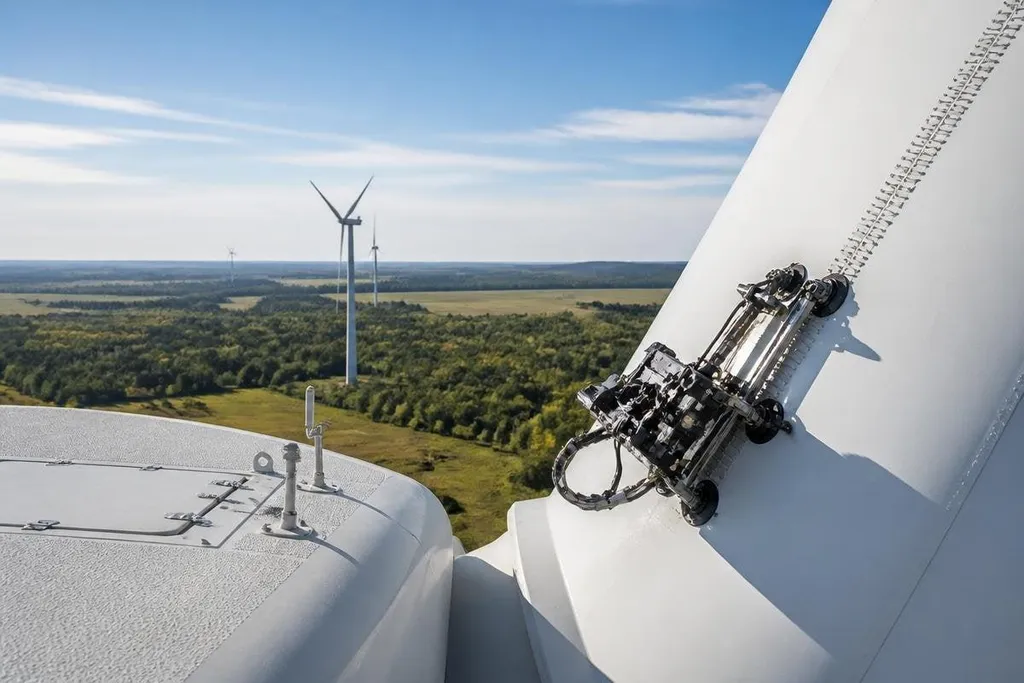
Wind turbine inspection has long meant sending people up towers, across blades, or into tight nacelle spaces. Robots can move some of that work to cameras, sensors, and remote operators, but the value depends on what they can inspect without help.
Quick read
- Blade robots check surfaces where cracks, erosion, or loose material may appear.
- Drones can collect visual data without placing a technician on the blade.
- Cost savings remain unproven without a named robot, turbine operator, and test result.
Where robots fit on a turbine
A wind turbine gives inspection robots three main work areas: the blades, the tower, and the nacelle. The nacelle is the housing behind the blades that contains parts such as the generator and gearbox.
Each area calls for a different machine. A climbing robot may attach to a tower or blade surface. A drone can fly around the outside and record images.
A small ground robot may support work near the tower base, where cables, doors, and uneven ground can slow a person down. The task decides the design. A robot that only takes photographs needs different hardware from one carrying an ultrasonic sensor, which uses sound waves to check for damage below a surface.
That distinction matters for an operator planning inspections across many turbines. A clear image may show a surface mark, but it may not show how deep the damage goes. The robot must collect the kind of data needed for the repair decision.
What changes for maintenance teams
Robots can reduce the time people spend at height or near moving equipment. They may also let a team inspect a blade from several angles and save the images for later review.
The work still needs people. A technician must set the inspection plan, check the data, decide whether a defect needs repair, and confirm that the turbine can safely return to service. Remote operation changes where the person works; it doesn't remove the need for their judgment.
Data handling becomes part of the job too. A useful system should link each image or sensor reading to a clear place on the blade, tower, or nacelle. Without that location record, a team may struggle to compare a new inspection with an older one.
A turbine robot’s result needs the blade section, sensor, test date, and fault beside it. When you read a report from Robot 24, check for those details before the article turns to the physical limits below.
The limits are physical
Wind turbines are tall, curved, exposed structures. Wind, rain, ice, glare, and dirty surfaces can affect a drone or climbing robot. Blade movement adds another safety concern, so inspection plans must account for turbine shutdowns and controlled access.
Inspection hardware also needs a reliable way to stay attached or hold its position. Magnets may work on some steel surfaces, but they won't solve every blade inspection problem. Suction, wheels, cables, or propellers each bring their own limits.
The hardest part may be the handoff from detection to repair. A robot can report a mark, crack, or loose material, but the operator still needs to know whether the issue is new, how large it is, and what repair method fits.
Without published field data, claims about faster inspections or lower costs should remain open. A buyer needs results from a named turbine type, weather conditions, inspection area, and human labor comparison.
A practical buying checklist
Before choosing a wind turbine inspection robot, check these points:
- Name the task: Decide whether the system records images, measures hidden damage, or supports repair work.
- Check the surface: Confirm that its wheels, magnets, suction system, or cable setup fit the blade or tower material.
- Set the weather limit: Ask for operating limits for wind, rain, ice, and temperature.
- Review the data: Check how the system marks each finding and exports reports for maintenance records.
- Ask for field proof: Request a named site, turbine model, inspection count, and comparison with the current method.
- Price the whole job: Include setup, turbine shutdown time, operator hours, repairs, software, and training.
I’d skip any purchase based on a smooth video alone. The useful test is a repeatable inspection that gives a maintenance team enough evidence to make the next decision.
What happens next
Wind turbine robots will earn their place when operators publish results from real blades and towers, including missed defects, weather limits, inspection time, and total cost. Until those numbers appear, the sound choice is to buy the inspection result, not the robot’s camera.